
Ryland Grace Is the Most Realistic Engineer in Fiction (and NASA Just Backed Up His Homework)
I've read Project Hail Mary twice and watched the film opening weekend. I am, by any honest measure, a geek about this one.
So when NASA published a breakdown of the actual science behind the story, I expected a victory lap — a "look how much Andy Weir got right" listicle.
That's not what stuck with me.
What stuck with me is that the most beloved sci-fi novel of the decade isn't really about astrophysics, or first contact, or even Rocky (though I'd die for Rocky). It's the most accurate depiction of engineering under uncertainty I've ever seen on a page. And the NASA article, almost by accident, proves the point.
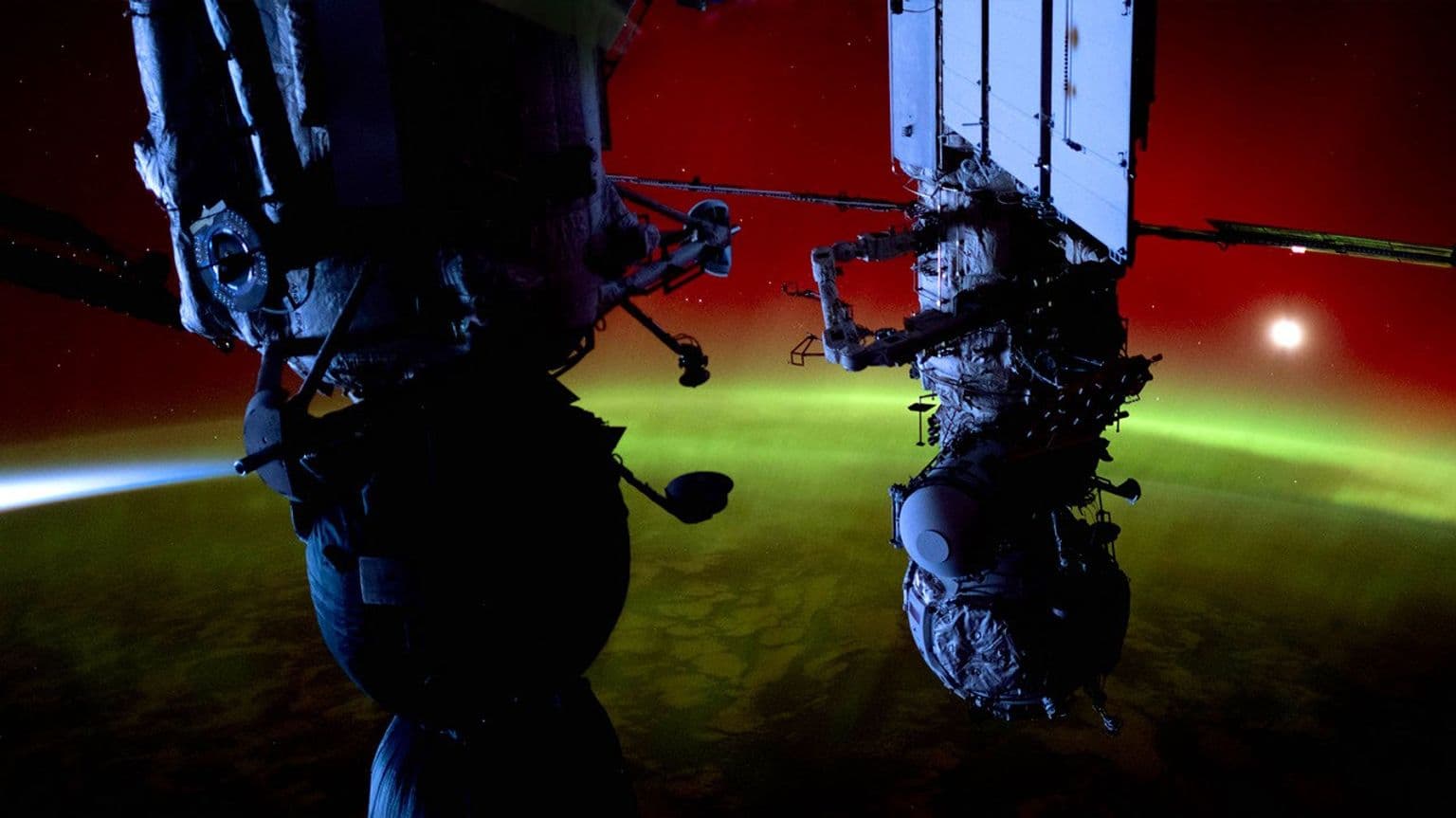
The Sun rising past the ISS, over an aurora. Project Hail Mary opens with a much less comforting image of our star: one that is quietly going dim. (Credit: NASA)
The science Weir got right — and the part that already changed
Start with the premise. The Sun is dimming. Something is eating its output. That something turns out to be astrophage — a microscopic organism that harvests stellar energy, migrates to Venus to breed off its CO₂, and stores that energy at an absurd density.
Sounds like pure invention. It mostly is. But the building blocks are real.
NASA points out that we already study microbes surviving conditions that should kill them. Algae thrived on the Artemis I trip around the Moon. Tardigrades — water bears — shrug off radiation and near-absolute-zero, dropping into suspended animation for decades. Weir didn't invent extremophile biology. He just gave it a terrifying appetite.
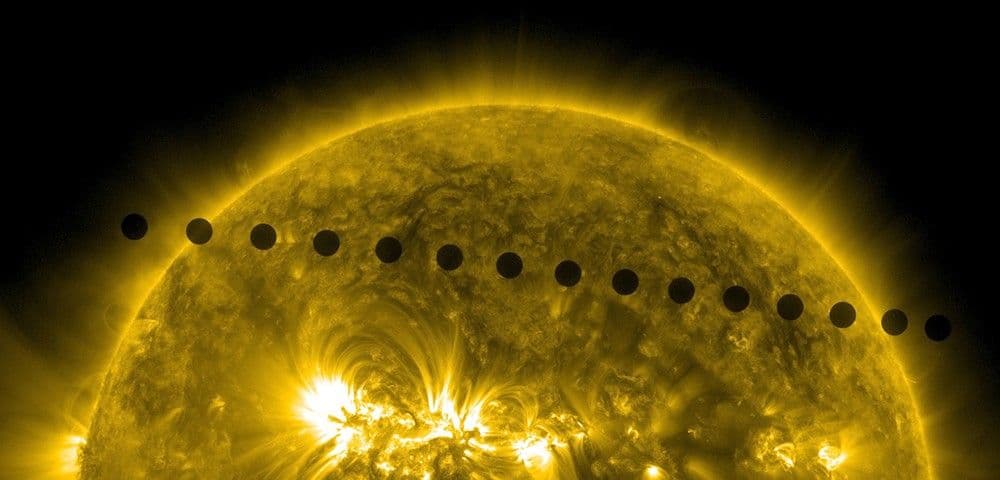
Venus crossing the Sun in 2012, as Astrophage does in the novel. A planet dimming its star's light as it passes is also exactly the signal we hunt for around other stars — which matters in a second. (Credit: NASA/SDO)
Then there's the part I find genuinely beautiful: the two star systems in the story — Tau Ceti and 40 Eridani A — are real, and they're our actual neighbors. But here's the detail that stopped me cold.
When Weir was writing, Tau Ceti e (the planet he calls "Adrian") looked like a real exoplanet. 40 Eridani A b — Rocky's homeworld — did too.
Both have since turned out to be false positives. The signals were quirks in the data analysis. Ghosts in the pipeline.
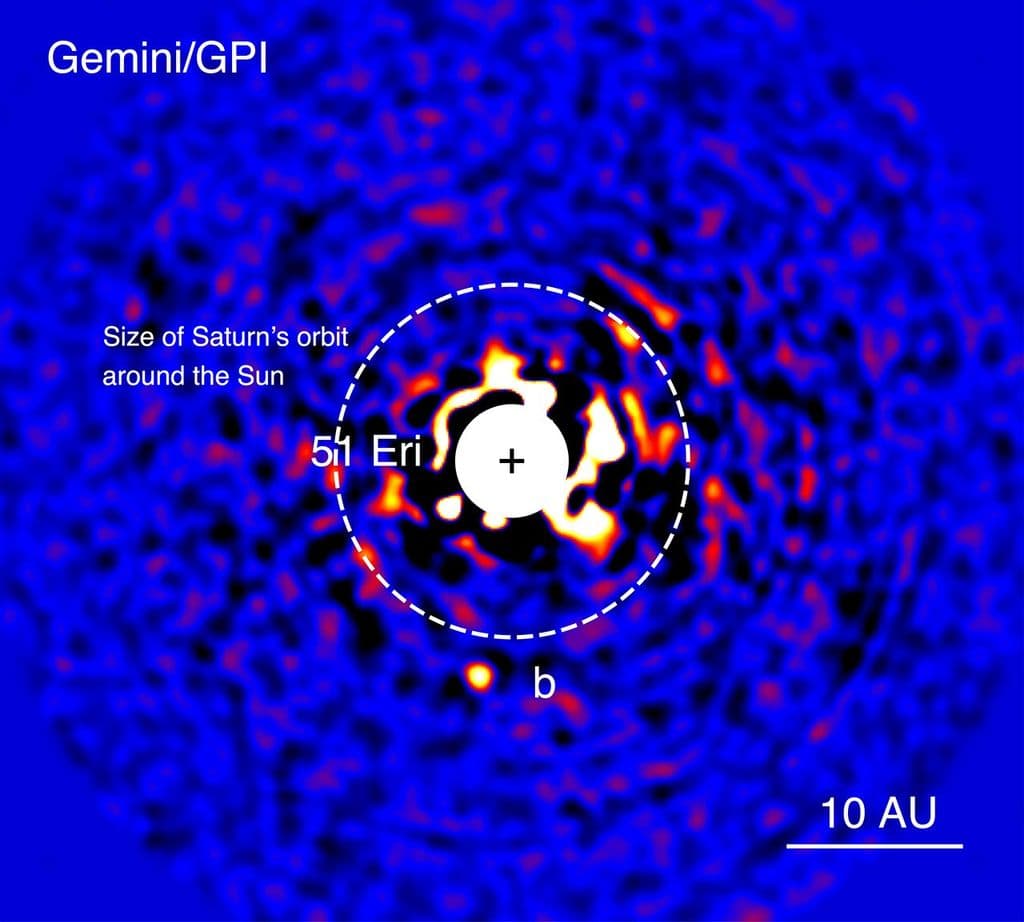
51 Eridani b — a real planet, directly imaged in the same Eridanus neighborhood as Rocky's home star. Look how faint and ambiguous the signal is. This is how thin the line between a discovery and a false positive actually gets. (Credit: J. Rameau / C. Marois / Gemini Planet Imager)
Think about what that means. The science was current when he wrote it. Then reality moved. The data got better, and the planets the entire plot stands on quietly evaporated.
That's not a knock on the book. That's the most realistic thing about it.
The real protagonist isn't Grace. It's the method.
Here's my actual thesis, and it's the builder in me talking:
Ryland Grace spends the entire story doing the job most of us actually do. He wakes up with no memory, on unfamiliar hardware, with no documentation, no teammate who speaks his language, and a problem that will kill everyone if he gets it wrong.
And then he debugs it. Slowly. Wrongly, at first. He forms a hypothesis, runs the cheapest possible experiment, watches it fail, and updates.
There's no genius montage. There's a guy with a notebook, isolating variables.
I wrote a LinkedIn post a few weeks ago about an AI model that ran autonomously for 35 hours on unfamiliar hardware with zero documentation — and the thing that separated it from every other model wasn't raw intelligence. It was coherence over time. The ability to stay in the problem across a thousand steps without drifting, repeating itself, or quietly giving up.
That's Project Hail Mary. That's the whole book.
Grace's superpower was never that he was the smartest scientist on Earth — he explicitly wasn't. It was that he could stay coherent across an impossible problem, on no sleep, alone, while afraid. The other scientists on Earth had more credentials. He had a higher tolerance for staying inside an unsolved problem.
The bottleneck was never raw intelligence. It was the willingness to stay in the problem after the obvious approaches failed.
Rocky and the underrated skill of building a shared language
The Rocky chapters get loved for the emotional payoff, and rightly so. But re-read them as an engineer and they're something else entirely.
Two systems with completely incompatible interfaces — different senses, different physics intuitions, no shared protocol — slowly bootstrap a working communication layer from nothing. Numbers first. Then objects. Then concepts. They build an API to each other's minds, one painful handshake at a time.
I've watched teams fail to do this with a shared language and a shared office.
The lesson isn't "aliens can be friends." It's that the hard part of any hard problem is rarely the physics. It's getting two minds aligned on what's actually being said. Coherence between people is harder than coherence within one head — and Weir made it the emotional core of the book without ever calling it engineering.
A few takeaways I'm bringing home (yes, from a sci-fi novel)
→ Your best understanding has an expiration date. Tau Ceti e was "real" until it wasn't. Build like the data will move, because it will. The engineer who assumes today's facts are permanent is writing tomorrow's false positive.
→ Coherence beats brilliance on long problems. The model that doesn't quit at hour 30, the founder who's still iterating in month 18, Ryland Grace alone in the dark — same skill. The ability to stay in the problem is the most underrated technical ability there is.
→ The interface is the hard part. Rocky and Grace spent more effort understanding each other than solving the science. Every team I've been on has had the same ratio and pretended otherwise.
→ Cheap experiments win. Grace never bet everything on one move. Smallest test, fastest feedback, update, repeat. That's not heroism. That's good engineering, dramatized.
Why a "geek" novel earns the obsession
I think Project Hail Mary hit so hard because it's secretly a love letter to the scientific method — to the unglamorous loop of guess, test, fail, learn, repeat, performed by someone who is scared and tired and does it anyway.
NASA's article tries to grade Weir's science homework. Some of it holds up. Some of it — the actual planets — already got overtaken by better data.
But it graded the wrong thing. The science was always going to age. The method is the part that's eternal, and it's the part Weir nailed completely.
The Sun got dimmer. One guy with a notebook refused to stop iterating.
Honestly? Most days at a desk, building anything hard, that's exactly how it feels.
What's the piece of fiction that accidentally taught you the most about how you actually work? I'll go first: a man, an alien, and a spreadsheet, somewhere out past 40 Eridani.